Expert Reports on Surge and Lightning Damage
Was it the lightning, or had the device reached the end of its life? We prove or disprove the surge cause with lightning location data, trace patterns and X-ray examination.
Surge is often reported and rarely proven. An inverter that fails after eight years is usually worn out, even if there was a thunderstorm the day before. We give you the basis for a decision: a lightning event at the place and time, a typical trace pattern on the electronics and a traceable coupling path, or none of these.
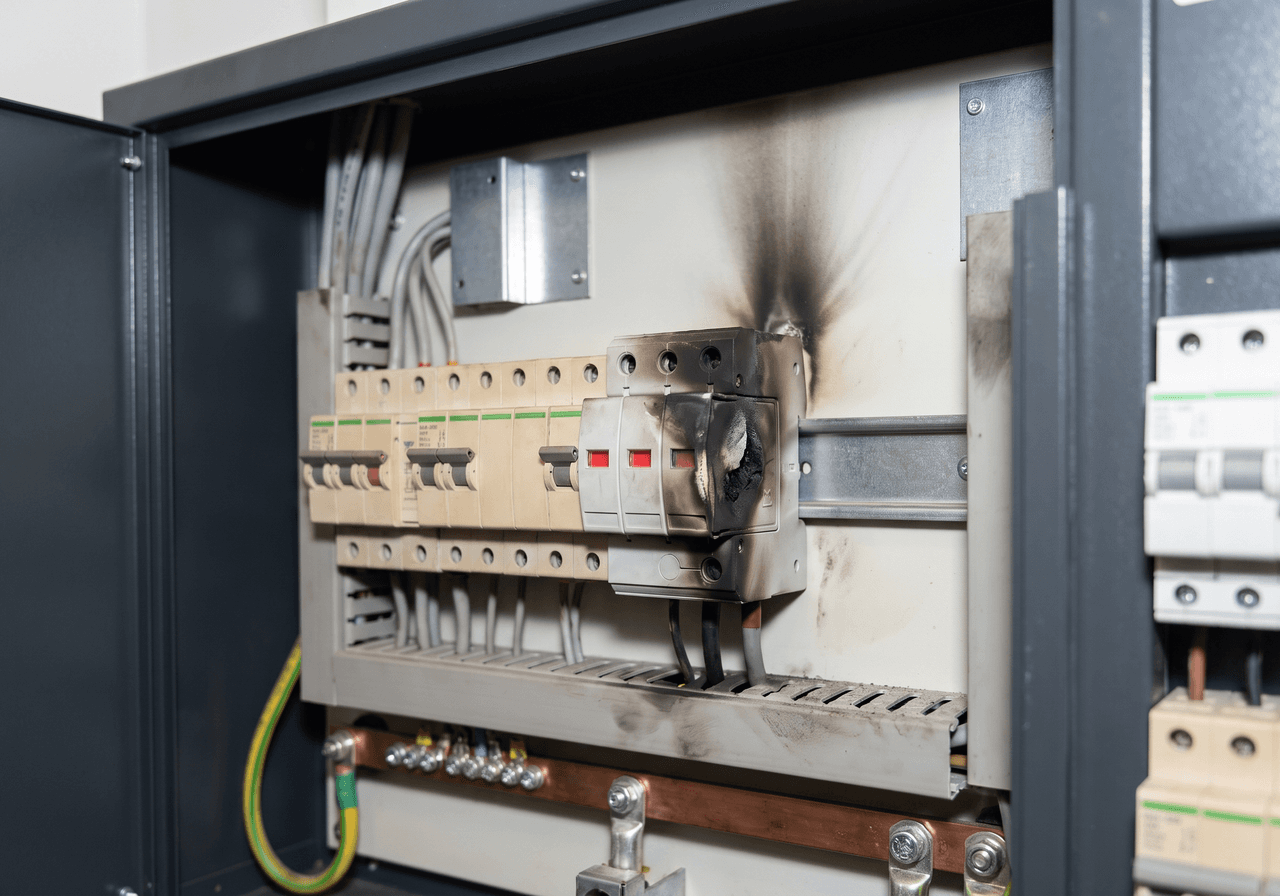
Typical damage patterns
- Inverters, data loggers and communication interfaces after thunderstorms
- Battery storage and energy management with failed CAN or RS485 modules
- Heating controls, heat pumps and pump controls after lightning exposure
- Lift controls, fire alarm systems and building automation
- Inductive coupling via data and network cables with several affected devices
- Damage despite existing lightning protection at lightning currents above the design limit
Questions of evidence we answer
- Is a lightning event at the loss location and time plausible in place and time?
- Does the electronics show a trace pattern typical of surge, or age-related wear?
- By which path was the surge coupled in: direct strike, conducted or inductive?
- Did defects in the internal lightning and surge protection contribute to the extent, and is there recourse?
- Are the submitted repair costs damage-related and in line with market rates?
How we examine
Systematic exclusion logic: every conceivable cause is examined individually and ruled out with reasons until the most probable one remains.
- Retrieval of lightning location data for the site and period
- Visual inspection of the damaged goods, disassembly and age determination from component date codes
- Check for soot marks, burst semiconductors, vaporised conductor tracks and bond wires
- Micro-focus X-ray examination of semiconductors where no external traces are visible
- Review of protective measures on site: arresters, equipotential bonding, shielding, separation distances
- Matching the time of failure with the recorded event and checking other devices on the premises
- Cost review, current-value determination per valuation guideline where the service life has been exceeded
The result
You receive an unambiguous classification: surge damage or operational failure. In case of surge, we name the coupling path and assess the internal lightning protection against DIN EN 62305. In case of wear, we substantiate the exclusion so that it holds before the policyholder and in court.
Frequently asked questions
Is the repair company's statement that it was surge sufficient?
No. Repair invoices frequently name surge as the cause without the components having been examined. The classification follows only from lightning data, trace pattern and component age together.
What if the defective device has already been disposed of?
Then only a plausibility check based on the file and lightning location data remains. The cause can no longer be verified, and the report says so.
Do you also review smaller losses from documents only?
Yes. For low loss amounts we prepare a document review with lightning data comparison and invoice check, without laboratory examination.
Enquiry about this type of loss
A few key facts, and we get back to you on the same working day with an assessment of how to proceed.
Do you have a case?
Call us or send us the claim notification with your questions of evidence. We get back to you the same working day.